Asphalt Shingles
The Story of Asphalt Shingle Roofing: From Early Innovation to Modern Mastery
Asphalt shingles are the most popular roofing material in North America—and for good reason. Affordable, durable, and versatile, they’ve covered everything from early 20th-century cottages to today’s modern homes.But asphalt shingles didn’t start out as the reliable systems we know today. In this article, we’ll walk through the complete history of asphalt shingle roofing, how the materials have evolved, and why today’s shingles offer better performance than ever before.
The Origins of Asphalt Shingles
Asphalt shingles were first introduced in the early 1900s as an alternative to wood and slate. The earliest versions were developed by Henry M. Reynolds in 1903, who cut shingles from rolled asphalt roofing material.
At the time, these shingles were seen as a fire-resistant alternative to wood shakes, which were prone to ignition during dry seasons or chimney fires. Their ease of installation and affordability quickly made them a favorite among builders.
By the 1920s, mass production had kicked in, and asphalt shingles were being used nationwide—especially in suburban and residential developments.
How Asphalt Shingles Have Evolved
Asphalt shingles have gone through several transformations to become the high-performance roofing materials we rely on today.
Key Milestones in Shingle Development:
- 1920s–1940s: Early shingles were made from organic felt saturated in asphalt and topped with crushed stone for protection.
- 1950s–1980s: Manufacturers improved granule adhesion and introduced sealant strips to reduce wind uplift.
- 1980s–2000s: The shift to fiberglass mat cores increased fire resistance and durability while reducing weight.
- Today: High-definition architectural shingles and impact-rated options dominate the market, offering long-term warranties and designer curb appeal.
Asphalt shingles are one of the most common sloped roofing systems used in residential construction across Arizona and the Southwest.
What Are Asphalt Shingles Made Of?
Modern asphalt shingles are a composite material made up of several components:
- Fiberglass Mat – Acts as the base or “backbone” of the shingle, offering strength and fire resistance.
- Asphalt Coating – Provides waterproofing and flexibility.
- Ceramic-Coated Granules – Protects against UV damage and gives shingles their color and texture.
- Sealant Strips – Help the shingles self-bond in hot temperatures, improving wind resistance.
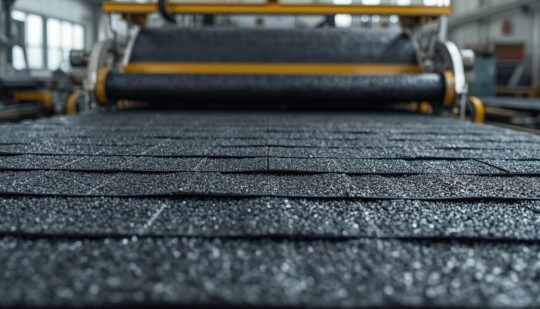
Some shingles also include algae-resistant granules, impact-resistant layers, and reflective additives for energy efficiency.
Types of Asphalt Shingles Today
Modern asphalt shingles come in a variety of styles to suit every budget and aesthetic:
1. 3-Tab Shingles
- The most affordable option
- Flat profile with uniform appearance
- 20–25 year lifespan
2. Architectural (Dimensional) Shingles
- Multi-layered for depth and durability
- Enhanced wind resistance
- 30–50 year lifespan
3. Luxury Shingles
- Designed to mimic slate or wood shake
- Heavier and more robust
- Often rated for Class 4 impact resistance
Homeowners often compare asphalt shingles with concrete tile when weighing upfront cost, longevity, and long-term maintenance.
Why Asphalt Shingles Are Still a Top Choice
Asphalt shingles continue to lead the roofing industry for several reasons:
- Affordability – Lower upfront cost compared to tile, slate, or metal
- Ease of Installation – Fast to install, repair, or replace
- Style Variety – Available in a wide range of colors, textures, and profiles
- Energy Efficiency – Cool roof shingles meet ENERGY STAR® and Title 24 standards
- Durability – Rated for wind, fire, and impact resistance
In Arizona, modern shingles with reflective granules help homes stay cooler and reduce energy bills—making them a popular choice even in extreme heat.
How Asphalt Shingles Are Installed
A typical asphalt shingle roof installation includes the following steps:
- Tear-off (if reroofing) and inspection of the deck
- Underlayment Installation – Including ice & water shield in vulnerable areas
- Starter Shingles – For proper edge sealing
- Shingle Application – Typically in a staggered pattern for wind resistance
- Ridge Cap Shingles – For the final touch and added protection
Professional installation is key to ensuring long-term performance—especially in high-wind or high-heat areas like Phoenix.
Common Causes of Asphalt Shingle Failure
While material quality matters, the most common cause of asphalt shingle failure is improper installation. In Arizona, many premature shingle failures can be traced back to basic nailing and layering mistakes rather than the shingles themselves.
Common installation-related issues include:
- Nails placed too high above the nailing line
- Too few fasteners per shingle
- Nails that are too short to properly penetrate the deck
- Installing new shingles over existing shingles, which can trap heat and moisture and lead to cupping, distortion, and reduced lifespan
Even high-quality shingles can fail early when these fundamentals are ignored.
Maintenance and Lifespan
With proper installation and ventilation, most asphalt shingle roofs last 20–30 years (or more for architectural and luxury shingles).
Maintenance Tips:
- Inspect for missing or curled shingles after storms
- Clean debris from valleys and gutters regularly
- Check attic ventilation and insulation annually
- Address minor repairs quickly to avoid larger issues
Pro Tip: Consider Shingles with Cool Roof Technology
Arizona homeowners can benefit from shingles that use solar-reflective granules, which reduce heat absorption and help maintain lower attic temperatures.
These shingles:
- Improve comfort indoors
- Reduce cooling loads on HVAC systems
- May qualify for energy rebates
Final Thoughts: Asphalt Shingles Are a Smart, Reliable Choice
From their invention in 1903 to the high-tech shingles of today, asphalt roofing has come a long way. Whether you’re building a new home or replacing an older roof, asphalt shingles offer a winning combination of style, performance, and value.
Because factors like roof slope, ventilation, and existing materials all affect shingle performance, a professional roof inspection is often the best way to determine whether asphalt shingles are the right choice.
Professional installation and inspection services in Arizona are available through Thunderbird Roofing Systems.