Built-Up Roofing (BUR)
The History and Evolution of Built-Up Roofing (BUR): From Tar and Gravel to Today’s Modern Multi-Ply Systems.
When it comes to proven performance, few roofing systems can match the legacy of Built-Up Roofing (BUR). With origins that trace back over 100 years, BUR has remained a reliable flat roofing solution for commercial buildings across the country—including right here in Arizona’s sunbaked climate.
This article walks you through the complete history of BUR, how it works, and why it’s still relevant in today’s roofing industry.
Built-up roofing is one of the oldest flat roofing systems still in use today, and it’s often considered alongside other flat roof options depending on durability and redundancy needs.
The Origins of Built-Up Roofing
Built-up roofing can be traced back to the mid-1800s, when early forms of “tar and paper” roofs were developed in response to the need for durable waterproofing on flat and low-slope buildings.
Back then, BUR consisted of alternating layers of coal tar pitch and felt, applied in multiple plies and topped with gravel or slag for protection. These early systems were labor-intensive and messy—but they worked. The combination of layers created redundancy and waterproofing that outperformed other flat-roof methods of the time.
Growth of BUR Through the 20th Century
As construction technology improved throughout the 20th century, so did BUR systems. By the 1920s–1950s, coal tar was gradually replaced by asphalt-based bitumen, which was easier to work with and safer to install.
Key improvements included:
- Higher-quality felts made from fiberglass or organic mats
- Hot-mop asphalt kettles that made application faster and more uniform
- Gravel surfacing that helped reflect UV rays and protect against foot traffic
- Cold-applied systems that reduced fumes and fire risk
By the 1970s, BUR was the dominant flat roofing system across commercial real estate—from warehouses and hospitals to schools and office buildings.
What Is a Built-Up Roof?
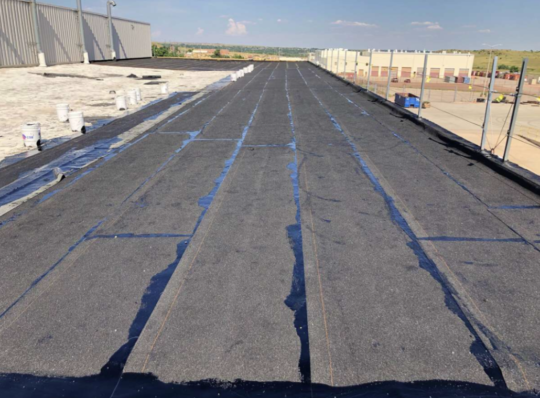
A Built-Up Roof is a multi-layered system made of alternating plies of roofing felt (reinforcement) and bitumen (asphalt or cold adhesive), finished with a protective top layer. This top surface might be:
- Gravel (commonly called a tar-and-gravel roof)
- Mineral-surfaced cap sheet
- Reflective coating
The multiple plies work together to create a redundant waterproofing barrier, which is why BUR is often considered a “fail-safe” system—if one layer fails, others continue to protect the building.
Common Problems With Built-Up Roofing (BUR)
- Blistering caused by trapped moisture between plies
- Alligatoring and surface cracking as systems age
- Long-term ponding water due to inadequate drainage
- Aging felts losing flexibility over time
While built-up roofing is known for redundancy and long-term durability, most failures are related to age, moisture trapped between layers, or chronic ponding water rather than normal foot traffic. Proper drainage, periodic inspections, and timely repairs play a much larger role in BUR performance than surface wear alone.
Buckling in built-up roofing systems is often caused by thermal movement and trapped stresses, similar to the conditions that lead to roof buckling in asphalt systems.
Modern BUR Roof Systems: Still Standing Strong
Although newer technologies like single-ply membranes and spray foam roofs have gained popularity, modern BUR systems remain widely used—especially in buildings requiring high durability and proven performance.
What Makes Today’s BUR Systems Better?
- Advanced Reinforcements
Today’s plies use fiberglass mats or polyester scrims for improved strength and dimensional stability. - Modified Asphalt Options
Many BUR systems now include polymer-modified bitumen (like SBS or APP) for added flexibility, UV resistance, and durability. - Cool Roof Surfacing
Modern BURs can be finished with white or reflective coatings to comply with Title 24, LEED, or Energy Star requirements. - Cold-Applied BUR
Eliminates the need for hot asphalt and open flames, improving jobsite safety and reducing odor—ideal for sensitive locations like schools and medical centers.
In some cases, building owners compare built-up roofing with spray foam systems when prioritizing redundancy, insulation value, and long-term maintenance strategy.
BUR Roof Installation: How It Works
- Base Sheet – Mechanically fastened or adhered to the roof deck
- Multiple Ply Sheets – Typically 3–5 layers of asphalt-saturated felt or fiberglass, applied with hot asphalt or cold adhesive
- Flood Coat – Final layer of asphalt applied across the entire surface
- Surfacing Layer – Gravel, mineral cap sheet, or reflective coating to protect the system from UV, fire, and traffic
BUR systems can range from 3-ply to 5-ply or more, depending on building needs and warranty specifications.
Why Built-Up Roofing Is Still a Great Fit for Arizona
In a climate like Arizona’s—with intense sunlight, monsoon rains, and high temperature swings—BUR has several advantages:
- Superior UV protection (especially with gravel or cool roof surfacing)
- Excellent resistance to thermal shock
- Time-tested in high-heat and flat-roof environments
- Ideal for large commercial and industrial roofs
Common Applications of BUR Roofing
BUR is a go-to system for:
- Office complexes
- Shopping centers
- Public institutions (schools, universities)
- Hospitals and medical buildings
- Industrial and warehouse facilities
Its redundancy and durability make it a smart investment for mission-critical buildings that need dependable, long-term waterproofing.
Maintenance and Longevity
With proper maintenance, a BUR system can last 20–30 years or more. Key maintenance practices include:
- Regular inspections for ponding water or surface damage
- Recoating or re-graveling as needed
- Prompt repair of blisters, splits, or membrane separations
Because of the system’s multi-layer design, minor issues often don’t lead to leaks—giving building owners more time to react.
Because roof condition, drainage, and structural capacity all influence whether a built-up system is appropriate, a professional roof inspection is usually the best place to start.
Final Thoughts: Built-Up Roofing Isn’t Going Anywhere
BUR might be one of the oldest flat roofing systems, but its time-tested performance, adaptability, and strength make it as relevant today as ever. Whether you’re covering a warehouse in Phoenix or retrofitting an older commercial property, a modern BUR roof can deliver the durability, protection, and value your building needs.
Professional installation and inspection services in Arizona are available through Thunderbird Roofing Systems.